
Table of Contents
Many older adults want to stay in their own homes, and many adult children want to help without taking over. If you’re looking into home support services for seniors GTA, you may be hoping for something simple: reliable help with everyday tasks that keeps life steady and dignified at home. For families across Toronto and the GTA, this kind of support can reduce stress while respecting independence.
In-home support is often about the small things that add up. When those tasks feel manageable, seniors can keep their routines, their preferences, and their sense of control.
What Home Support Service means
Home Support Service is practical, day-to-day help that makes living at home easier and safer in a general sense, without providing health care. It focuses on home and lifestyle tasks that can become tiring, time consuming, or overwhelming with age.
Many Home Support Service providers typically help with things like keeping the home in order, preparing simple food, running errands, and offering companionship. The goal is to support the person’s usual way of living, not to take over.
This is often a good fit when someone is mostly independent, but could use consistent backup.
Why is this type of support so helpful?
Support at home can help in two directions at once:
It helps seniors preserve energy for the parts of life they value most: family visits, hobbies, faith community, outings, or simply a calm day at home.
It also helps adult children and family caregivers move from constant worry to a steadier plan. Instead of piecing together help in a crisis, you can set up a routine that fits the household.
Over time, Home Support Service can also reduce friction. A neutral helper can make it easier to accept assistance with tasks that may feel personal or emotionally loaded when done by family.
What is it NOT?
Home Support Service is not clinical care. It does not replace regulated health services or hands-on personal care.
A good way to think about the boundary is this: home support assists with everyday living tasks and companionship, while medical or personal care involves clinical judgement or intimate physical assistance.
If you’re unsure what falls into which category, it’s reasonable to ask any provider to clearly explain their scope of services in plain language, including what they can and cannot do.
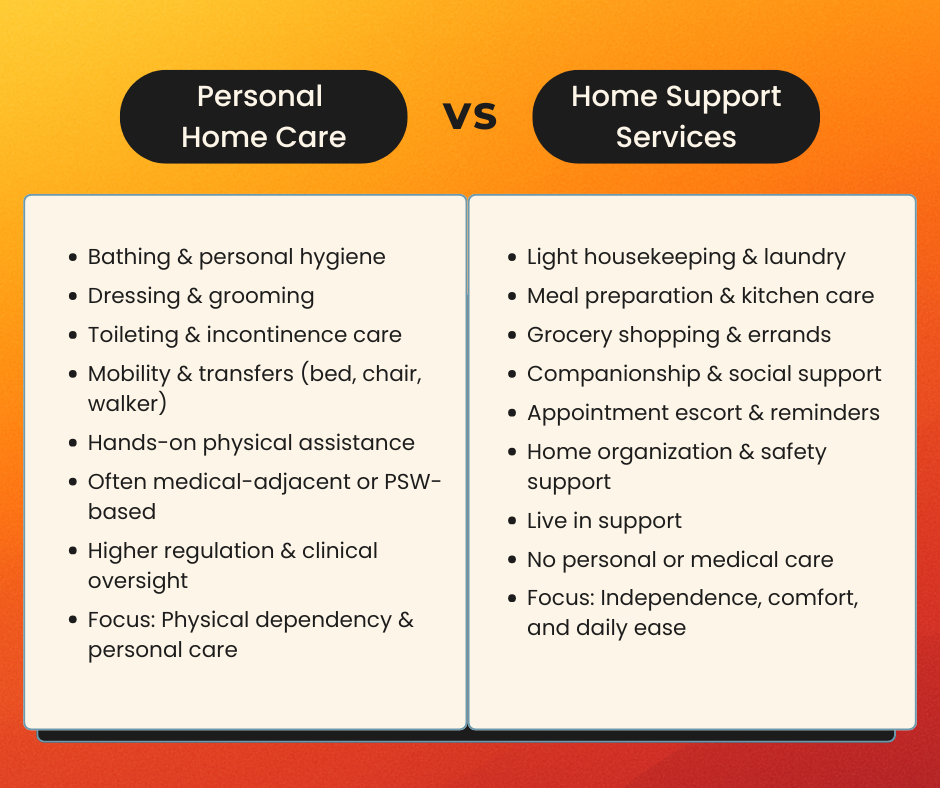
Common types of Home Support Services
Home Support can be offered a few hours a week, several times a week, or in other patterns depending on need. These are common areas many families ask about.
Light housekeeping and laundry
A tidy home can reduce stress and make daily routines easier. Often includes light housekeeping and laundry, keeping the living space comfortable and more manageable.
Simple meal prep and kitchen tidy
Food routines can become harder when shopping, planning, and cleanup start to feel like “too much.” Simple meal prep plus a kitchen tidy can support regular eating without turning the home into a project.
Grocery shopping and errands
Errands can be tiring even for people who are otherwise doing well. Help with grocery shopping/errands can keep the pantry stocked and reduce last minute scrambles.
Companionship
Companionship is not a luxury. For many seniors, a regular visit can bring structure to the week, conversation, and a sense of being seen. It can also help family members feel reassured that someone has been there recently.
Appointment escort
An appointment escort can mean help with planning, getting there, and staying organized without stepping into medical decision-making. This type of support can be especially helpful when schedules, paperwork, or waiting rooms feel overwhelming.
Light organizing and decluttering
Light organizing/decluttering can help restore a sense of order in high traffic areas like kitchens, bedrooms, or entryways. The focus is usually on practical improvements that make daily life smoother.
Medication reminders
Some include medication reminders. This is limited to reminders only, such as prompting at the agreed time, not handling medical tasks.
See what living made easy offer here
When to consider Home Support Services?
Families often start looking for in-home support for seniors when they notice little slips that aren’t emergencies but keep repeating.
Here are common signs it may be time to explore help:
- The home is getting harder to keep up with.
- Meals are skipped because cooking and cleanup feel tiring.
- Errands are piling up or becoming stressful.
- A senior seems isolated or has long stretches without social contact.
- An adult child is doing too much, too often, and is burning out.
- Appointments feel hard to manage from a planning and logistics standpoint.
It can also be a thoughtful choice after a life change, bereavement, a move, or simply the point when winter errands and household tasks feel like too much.
How to get started with a practical approach?
The best plans are usually simple. Start with what would make the next two weeks easier, not what would solve everything forever.
Step 1: Name the goal in everyday language
Instead of “You need help,” try “Let’s make weekdays easier,” or “Let’s take errands off your plate.”
Step 2: Pick the two or three tasks that matter most
Many families find it works better to start small. A few consistent supports can create quick relief without feeling intrusive.
Step 3: Decide what good support looks like
Talk through preferences:
– What time of day feels best?
– What foods are acceptable for simple meal prep?
– How does your parent like the kitchen left?
– Are there privacy boundaries for certain rooms or belongings?
Step 4: Create a routine and review it
After a few visits, review what’s working. Needs change, and support should be flexible enough to adjust.
Quick checklist:
setting up Home Support Service
- Identify the top 2–3 tasks that would reduce stress right now
- Write down preferences (food, routines, privacy, “do not touch” areas)
- Set a consistent schedule to start (even if it’s modest)
- Confirm the provider’s Home Support scope in writing or by email
- Decide how updates will be shared with family (and how often)
- Keep key info in one place (shopping list, appointment times, building details)
- Revisit the plan after the first few weeks and adjust as needed
Talking with a parent who values independence
This can be the hardest part. Many seniors don’t want to feel managed. The tone matters as much as the plan.
Try framing support as practical and normal:
- “This is like hiring help for the house, not giving up control.”
- “Let’s try it for a short period and see how it feels.”
- “I want our time together to be more enjoyable, not all chores.”
If your parent is hesitant, consider starting with the least sensitive support, errands, groceries, or light housekeeping. Once trust is built, it can be easier to add other support tasks.
What good Home Support Services looks like day to day
In many homes, the best support is calm and predictable. It should feel respectful, not rushed.
Look for an approach that:
- Follows the senior’s routines and preferences
- Communicates clearly about schedules and tasks
- Keeps the home comfortable without making it feel taken over.
- Brings steady companionship without forcing conversation
For adult children, it also helps when the support plan reduces decision fatigue. You shouldn’t have to reinvent the plan every week.
How Living Made Easy can help in Toronto/GTA
Living Made Easy provides Home Support Services for seniors and families in Toronto & GTA. Examples of support include light housekeeping, laundry, simple meal prep, kitchen tidy, grocery shopping/errands, companionship, appointment escort (logistics support), light organizing/decluttering, and medication reminders (reminders only).
If you’ve been searching for in-home support for seniors in the GTA because you want something practical and respectful, it can help to start with a short conversation about what help at home would look like in your family. You can learn more at LivingMadeEasy.
A calm next step
Home Support Service is, at its core, a way to protect energy, routine, and peace of mind. It can be light touch, flexible, and centred on the life your parent has already made easier.
If you’re in Toronto/GTA and want to explore in-home Support Services, book a free intro call at livingmadeeasy.ca.
FAQs:
What are Home Support Services for seniors?
Home Support is practical help with everyday tasks at home, such as light housekeeping, errands, simple meal prep, companionship, and appointment escort without providing clinical care.
How is in-home support Service different from medical home care?
Home support focuses on daily living and household routines, while medical home care involves clinical or regulated services. If you’re unsure, ask the provider to confirm their scope.
Can Home Support include medication reminders?
Yes, some providers offer medication reminders, meaning prompts at agreed times. This is a reminder only, not medication handling or medical decision making.
How do I introduce the idea to my parent without upsetting them?
Keep it practical and respectful: focus on making life easier (errands, meals, housekeeping), suggest a trial period, and emphasize that they stay in control of preferences and routines.
If I can not afford any home care services for my mom what is the solution?
If you can not afford any home care services you may qualify for free Ontario health at home services. you can contact OHAH via there website or you can call 310-2222 seven (7) days a week, 365 days a year.
If you’re in the GTA and want to talk through what kind of in-home support might help you or your family, you’re welcome to reach out.
Fill out the contact form below, and we’ll follow up with a short, friendly call — no pressure, just a conversation.